
CHRISTIAN LIFE IN
AN ANGSTY WORLD
CHRISTIAN LIFE IN AN ANGSTY WORLD
Feelings Of Anxiety, Apprehension, Insecurity, And Unhappiness
Chapter 1: Community

A bookstore on a Friday night, closing soon. Joel and I drifted from shelf to shelf: “I loved this as a kid,” “The girl on this cover reminds me of someone.” He was forgetting himself, remembering how to breathe around other people again.
Many people, especially young people, struggle with anxiety over their own introspection or in response to their surroundings. You may have felt like my friend, Joel, panicked by groups of people. Or perhaps you experience nervousness over every conversation, second-guessing everything you say.
Maybe getting help doesn’t need to be as straightforward as How do I get rid of anxiety? Just being with other Christians can get us in touch not only with community but with ourselves. We can understand better the issue causing us anxiety and get an opinion free of self-sabotage from those we trust.
Like in the case of Joel, relationships with other Christians can be ropes that tie us to the truth. Winds of fear never completely stop, but relationships tie us to a mast, God’s promises.
“The Sabbath was made for man,” Jesus said. Of course, our main goal at church is worshipping God, but His design for believers’ lives is meant to build a healthy environment for them. Part of church life is learning relationship skills that benefit all parts of our lives, including emotional health.
Right now the thought of walking around a crowded bookstore might seem suffocating. Or maybe you would go, then spend the rest of the night rethinking, overthinking. So are your friends, but they still want to see you there. You don’t belong to your thoughts, but with the community God has given you.
Related Scripture:
“Two are better than one, because they have a good return for their labor: If either of them falls down, one can help the other up. But pity anyone who falls and has no one to help them up. Also, if two lie down together, they will keep warm. But how can one keep warm alone? Though one may be overpowered, two can defend themselves. A cord of three strands is not quickly broken.” (Ecclesiastes 4:9-12).
"Carry each other’s burdens, and in this way you will fulfill the law of Christ.” (Galatians 6:2).
Chapter 2: Coming To Terms

My uncle’s smile was wry as he sat across the table at dinner. “You’ve been dropped from a helicopter into the sea,” he said of his special ops training. “You better figure out real quick how to use your pants to float.”
Or being locked in a small enclosure—just your thoughts and a gas irritant there with you, like a slow-release pepper spray.
“There’s no telling yourself that it doesn’t hurt.”
Likewise, if your mental health is floundering, denying feelings of anxiety and depression can aggravate the problem. The message of Dr. Bessel van der Kolk’s The Body Keeps the Score holds parallel. Repressed trauma will arise through self-destructive habits and relationship patterns.
Addictions, especially to social media, can be coping mechanisms for feelings of anxiety and depression. Trying to make an end-run around emotional struggles can cut us off from the help of loved ones. It can also steal the joy otherwise possible if we weren’t spending all our emotional energy hiding from our own pain.
In contrast, the Bible shows us examples of vulnerability and the embracing of sorrow that lay people open to God’s work in their lives. Broken-hearted Hannah waited for a child in the book of Samuel; Paul mourned his people’s lack of faith in the New Testament. God was the comfort of both. Hannah was blessed with a son, and Paul’s compassion for the Jews drove his continued efforts to reach them.
So you face the hurt, my uncle said of his time in training. It hurts, it hurts, it hurts. Maybe you’ll never be the same afterwards. But there will be an afterwards, you tell yourself.
You wouldn’t only apply an ice pack to a sprained ankle. You would go to a doctor to be treated so that eventually you wouldn’t need the cold to be able to bear the pain. Sometimes there are no answers but to find the bottom of that pool—your fear or sadness. Being in touch with the problem will help you see the solution, maybe a hard conversation or lifestyle change. But what if you’re struggling with something more slippery? A tendril of regrets or the loneliness that’s become part of the air we breathe?
Get it out of your lungs: Journal about it. Reach out to a friend. Keep being around people even if you can’t manage to be truly with them yet. Let God know you don’t see how He’s working in your situation right now. But that you are still looking.
Related Scripture:
“There is a time for everything, and a season for every activity under the heavens: …a time to weep and a time to laugh, a time to mourn and a time to dance.” (Ecclesiastes 3:1).
“Record my misery; list my tears on your scroll—are they not in your record. Then my enemies will turn back when I call for help. By this I will know that God is for me.” (Psalm 56:8-9).
.
Chapter 3: Mind Games

When drawing a face, it helps to let the ends of lines tie up themselves.
The eyes can serve as anchor points, letting you judge how much space to allot to the cheeks, chin, and forehead. Then you can work on these sections one at a time, maybe left side of the forehead, then to right side of the jaw. The angles and lengths of where each part meets, then, will determine how well the sketch actually matches what you’re drawing.
You’ve confirmed each line before moving on to the next section. Your pencil can move on to the next part because you’re confident in the last.
A few “mind games” like the sketching strategy we’ve seen prove useful in the context of mental health. In parallel with the drawing example, one technique is considering each decision carefully, moving forward with your choice, and then releasing yourself from it. You don’t need to go over it again if you’ve put in enough consideration in the first place.
This inner dialogue can become a coping tool. Summarize your decision-making process with a concise phrase (“I chose this college because it offers ___”) and have it ready when doubts nag at you.
There’s a hard difference between a difficult decision and one that was actually wrong. Another cold-hard-truth coping practice is to ask, “Do I regret this choice?”
Not “Do I wish I’d done it differently?” or “Did everyone agree with what I did?”
If it truly was a bad move, take time to grieve what happened. Otherwise, know that your past self was looking out for you.
Maybe now it’s up to your present self to make a choice for the future. You know that God will be with you no matter which job you take, no matter what you decide for your relationship. But “in this world you will have trouble,” as Jesus said. Each action has an effect. How can you make the choice that will, based on the information you have at the moment, lead to the best results for you and your family?
If you have someone in your life who understands your situation well, go through this exercise with him or her. If not, write out each answer.
Contrary to most anxiety guides, let your mind go to worst-case scenario for a moment. What is the worst thing that could happen because of choice A? Realistically, how would you be affected if it went bust?
What could you do to resolve the hypothetical problem choice A could cause? How long would you need to spend solving the problem?
Would the benefits of choice A outweigh the possible harm it could bring?
In the end, Proverbs 19:11 tells us that the future is hidden from us, and our own experience tells us how sometimes a curse (or a blessing!) comes totally unforeseen. But God gives us the ability to learn from the past and to accept risks, knowing that the fallout will be in His hands.
Related Scripture:
“Or suppose a king is about to go to war against another king. Won’t he first sit down and consider whether he is able with ten thousand men to oppose the one coming against him with twenty thousand?” (Luke 14:31).
“For the Spirit God gave us does not make us timid, but gives us power, love and self-discipline.” (2 Timothy 1:7).
CHAPTER 4: A TRUE NORTH
We were silent long after Will’s death: no answers for the guilt and questions it left. In a time when society was less open to discussions of mental health, we were caught between “How did this happen?” and “How could we not have known?”
The Bible is rich with descriptions of the peace of God and His position as rescuer. Resources on mental health highlight these verses, coach us in applying them, and at times admonish us when we can’t. But sometimes feelings of depression and anxiety can’t just be “out thought.” Fearing for your security when you’re not at risk, seeing yourself as alone even when surrounded by friends… Knowing intellectually that God is with you in your problems does not always allow you to see past them.
The gospel of John had nothing to say about Will took his own life. I can’t even say I intentionally looked to it for guidance in how to respond; I just listened to it on my long drives to nowhere. Pain is pain. But Jesus was still who I knew Him to be—wisdom, righteousness, and love.
We can’t always stop depression and anxiety from taking us away from ourselves, but remembering who God is will be the first step to coming home. Our God wants His character to be the subtext of how we see reality. People are meant to be anchored, moored. Even if they never come back, where they started from is part of who they are.
Both believers and non-believers struggle to make sense of what’s going on in the world and even in their own minds. We have a true north, though: a God who loves us, accepts us, and gives us a future. And when we can’t envision that future beyond all the problems we face today, we have our knowledge of God Himself: the One exists who rises above.
Ecclesiastes 3:11 tells us that God is making everything beautiful—but in His time. And in ways we cannot know.
Some parts of church culture has been defensive or overly simplistic when questioned about the existence of pain in the universe. After a young man died of cancer in my church, his mother became desperate to find meaning in her loss, only to find deeper heartache when none of her son’s medical staff they had witnessed to seemed to receive the gospel.
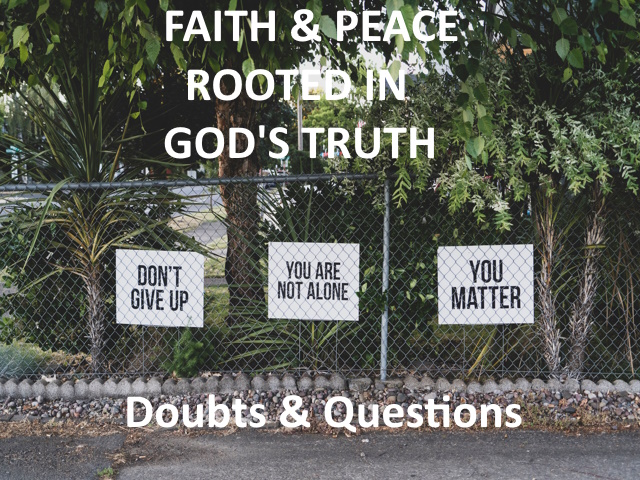
And yet her greatest comfort continued to be her God. Because even when her faith didn’t seem to change the world, it was enough to hold her world together. She had a choice between a worldview of materialism—where nothing has to make sense since there is no plan, no one guiding us—or one of belief. Where, alongside doubts and questions, faith and peace are rooted in God’s truth.
Related Scripture:
“I am the good shepherd; I know my sheep and my sheep know me—just as the Father knows me and I know the Father—and I lay down my life for the sheep.” (John 10:14-15).
“He who forms the mountains, who creates the wind, and who reveals his thoughts to mankind, who turns dawn to darkness, and treads on the heights of the earth—the Lord God Almighty is his name.” (Amos 4:13).
CHAPTER 5: PASSION

Step. Step. Back. My friend became a flash of light, then shadow on the swing dance floor. She and her partner went close, their feet a mirror image. Then out she struck, all sharp lines around the flair of her skirt.
The idea of passion in our culture often gets stripped of any other meaning but that of romantic love. But as the state of our country’s mental health shows, humanity was meant for so much more. Not that levels of low interest in our own lives are entirely our fault: long commutes to the office, “driven, high-efficiency” work, then the commute home tax us, making us even more susceptible to the attention vacuum of TV and social media. If you’re battling feelings of depression or questioning your meaning in general, you’re up against not only the sorrows of everyday life, but against the nothingness of modern culture.
A word that describes the spirit of the age, besides the actively despairing angst, could be meh. Indifference.
The human mind was meant to pour into something beyond itself—other people, like your children or community; art; physical activities. All people are made in the image of God. We see His creation and love for beauty, and our souls are built to reflect that energy. If we don’t live in to that part of ourselves, we miss out on part of the joy God has for us.
Running, dancing, gardening: they are avenues of plugging into God’s creation. Getting in touch with and taking care of our bodies remains a key recommendation by even secular therapists.
Sometimes what stops us from doing what we love seems to be the very feelings we seek to treat. An emptiness that steals the joy our passions once brought.
So maybe today you take only a fifteen-minute swim. And yes, you feel nothing afterwards.
But setting your body in that routine will prepare you for the day when you’ll be able to receive that happiness again.
Basically, structure can serve this passion.
On the seventh day, God rested. Human cultures rely on calendars; meal cycle; rest periods that come … periodically.
Entropy is the scientific principle of how the universe wastes away. “Nothing gold can stay,” as the Robert Frost poem goes. The same holds for our personal and spiritual life. If you want to keep in touch with yourself, with God, and with your friends, intentionality alone keeps entropy at bay. Schedule a recurring coffee date with a coworker or commit to journaling every week. Decide which time of day works best to check in with God.
In the Old Testament, God told the Israelites to recite and meditate upon scripture. Of course, there’s no power of salvation in this repetition—that comes with faith in Christ’s work. But nonetheless, memorizing Scripture and reciting it regularly gives our mind ground to stand on. Again, secular literature points to the benefits of meditation, such as stress management and improvement in attention span. Some sources even encourage setting your mind on positive ideas like things that bring you joy or your hopes for the day ahead. Though this practice aligns us with a spirit of gratitude, a deeper meditation takes us to the source of positive thinking and of our potential. So much remains hidden from the human heart, but pondering Bible verses edges us toward true knowledge, an understanding of who we are and who is guiding us.
We are leaning in to the schema God imprinted in us. This discipline prepares us to glorify God with our passion. Even if no one sees your pastel work or hears the guitar riff you’ve written, God does. He is at the heart of these endeavors as the one who authored them.
Related Scripture:
“Blessed is the one … whose delight is in the law of the Lord, and who meditates on his law day and night. That person is like a tree planted by streams of water, which yields its fruit in season.” (Psalm 1:1-3).
“Yet you, Lord, are our Father. We are the clay, you are the potter; we are all the work of your hand.” (Isaiah 64:8).
CHAPTER 6: SETTLING UP
In our study of anxiety, depression, and the Christian, we have discussed five topics to keep us strong:
- Community—who do you count on? Who could you count on if you let yourself open up to them?
- Coming to Terms—how do you cover over your pain? Are you being honest with yourself about your mental and spiritual health?
- Mind Games—how can you develop and internalize coping mechanisms to prepare for low periods?
- Worldview—how do you view reality? What is the true north of life’s questions?
- Passion—what are you doing when you feel most alive? How can you maximize that part of your life?
These are five steps to take toward wholeness, but none of these are eternal.
Peace with God. Some people dedicate their lives to it, serving in ministry or living in isolation to study Him. Others spend their lives running from Him.
On a global scale, we see religion, or hostility to it, as a defining characteristic of different cultures. The human soul bears a God-shaped hole, it’s been said. Even those who seem to have decided to put away their religious component still live with some worldview—some vision of what is true and right. For all of us, despair is the disconnect between that rightness and our actual state of being.
We were created for a perfect world. No wonder the human mind hasn’t adjusted to the stress and chaos it has now become. You are not broken for not having the tools to deal with brokenness, but you do need help if you’re going to learn to cope.
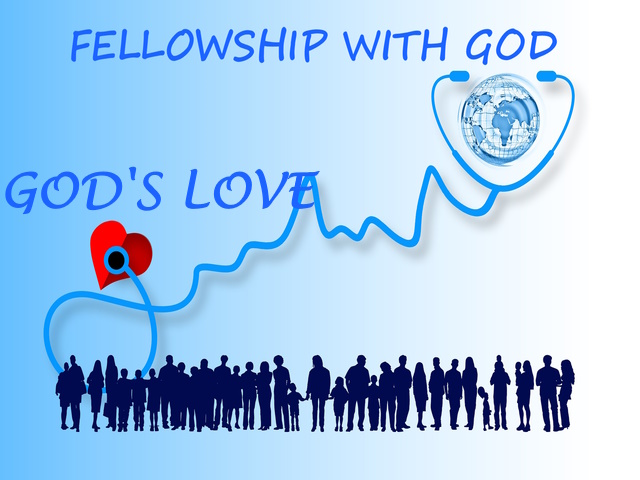
How can we reach the wellbeing we were meant to have without first becoming who we were meant to be? We were created for fellowship with God, and that remains the starting point for building a joyful life. Becoming a Christian is not an instant healing, but God will guide you on that journey.
Questions God.com provides information about why we’re so lost and about who we are in relation to God: His masterpiece, His children. If you believe already, you can find guides on how to connect with Him more deeply.
Anxiety and depression don’t have to define us. God created us for love—and for peace.
Related Scriptures:
“Peace I leave with you; my peace I give you. I do not give to you as the world gives. Do not let your hearts be troubled and do not be afraid.” (John 14:27).
“Therefore, since we have been justified through faith, we[a] have peace with God through our Lord Jesus Christ.” (Romans 5:1).
Author – Jacie Pridgeon
#329 - 3105 South Main St.
Penticton, BC, Canada
V2A 7H1
Contact us by emailing us at info@questionsgod.com or by submitting the form here.
Copyright 2026. QuestionsGod. All Rights Reserved.